Whether you're just starting your vinyl collection or have been spinning for years, the right turntable makes all the difference. We've selected the best options for every budget.
Discover our selection of turntables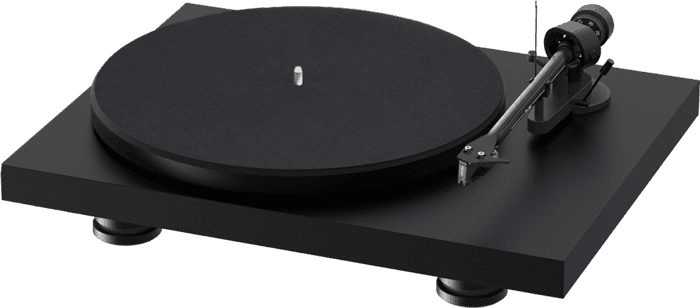
4.0
Average of 8 reviews
4
0
4
0
0
Whether a review is positive, negative, or neutral, we always publish it. However, we screen every review to ensure it is authentic and free of profanity. These checks happen automatically, though a human occasionally steps in. We never pay for reviews.
My initial exposure to John Mayall's music was through "Waiting For The Right Time", a track I discovered on a compilation album featuring contemporary Polydor artists. I was absolutely captivated by it! It took some time, but I eventually managed to get my hands on this album. While it's not as widely praised by fans as some of Mayall's other works, I find it quite enjoyable—it has a distinct atmosphere. As usual, he's backed by talented musicians, but there's a certain sparseness and loneliness to these songs. It's not all about having a good time; there's a fair amount of introspection here. A fun fact is that Jon Mark (guitar) and Johnny Almond (woodwinds) crossed paths during these recording sessions and later formed the duo Mark-Almond.
This isn't your typical classic or blues rock; it's more on the folk, folk rock, jazz rock side, or a blend of these. Check out my track ratings:A1: hillbilly, folk dance vibeA2: folk rockA3: love balladA4: folk rock, jazz rock fusionA5: folk rockA6: love balladB1: hillbilly, folk dance feelB2: romantic folk-jazz tuneB3: folk-jazz rockB4: old-school bluesB5: folk-jazz rockB6: folk rockIn a nutshell, John Mayall channels Donovan. That final track even takes a page from Donovan's Atlantis (released 22nd November 1968) 😉.
Alright, let's finally sort this out. First things first, ditch the tracks "Plan Your Revolution" and "Don't Pick Flowers." With those gone, you're left with the introspective masterpiece John aimed to create. Without those songs, he's crafted a unique body of work that no one else had dared to attempt at this stage of electric blues. I've had the pleasure of chatting with John a few times, and it was about twenty years back when I delved into his music with him, specifically songs that initially flew right over my head. I didn't take notes, so I'm paraphrasing here, but John mentioned that I should remember it was a peculiar time, and music mirrored the essence of the '60s. He added that everyone "had" to have a song about revolution and at least one with flowers. John wasn't particularly fond of "Plan Your Revolution," and he took the lyrics on a convoluted journey. As for "Don't Pick Flowers," it was just some nonsense that producers and hangers-on thought was cool. With that, John put his hand on his forehead, as if he wanted to erase those songs from his memory. From there, "Empty Rooms" stands as one of my all-time favorite albums. It's played low-key, with ashtrays overflowing with half-smoked cigarettes, heavy curtains drawn tight to keep out the day and set the mood. Every song feels like it could've been penned while lounging in a hotel room, killing time. These were blues songs, no doubt, reflecting the loneliness of life on the road. But John had visited California a few times by then and was inspired by what Steve Miller and bands like Spirit were doing. So, with Johnny Almond and Jon Mark onboard, John took the adventure to new heights, blending rock, blues, and jazz. These were brilliant, textured, free, original, and rich songs that finally seemed to complement John's vocals perfectly. "Empty Rooms" proves that sometimes, less is indeed more. This isn't an album that grows on you; it's more like a record you intuitively recognize as having always been a part of your soul, or perhaps a memory that makes you say, "Oh yeah, I forgot about that." It's nearly a perfect release, and I can't tell you how many times I wished this album was on the turntable when I returned from an assignment, but it never was. So, I'd slip it out of its jacket and cue it up, just like I'm doing today, wishing with all my heart that the one I loved was looking over at me as I slept, sheets in disarray, while "Lying In My Bed" softly played.
This isn't your typical classic or blues rock. It's more on the folk, folk rock, jazz rock side, or a blend of these. Check out my track ratings:A1: hillbilly, folk danceA2: folk rockA3: love balladA4: folk rock, jazz rockA5: folk rockA6: love balladB1: hillbilly, folk danceB2: romantic folk-jazz balladB3: folk-jazz rockB4: old-school bluesB5: folk-jazz rockB6: folk rockIn a nutshell, John Mayall channels Donovan. The final track takes a page from Donovan's Atlantis (released 22th November 1968) 😉.
My initial encounter with John Mayall's music was through "Waiting For The Right Time", featured on a compilation album showcasing Polydor's latest releases at the time. I was absolutely captivated by it! It took some time to hunt down this particular album, but I managed to find it eventually. While this Mayall record might not receive as much praise from fans compared to his other works, I believe it's quite good - it possesses a distinct atmosphere. As usual, he's accompanied by talented musicians, but there's a certain minimalistic and solitary feel to these songs. It's not all about having a good time; there's a fair amount of introspection here. A fun fact is that Jon Mark (guitar) and Johnny Almond (woodwinds) crossed paths during these recording sessions and later formed the duo Mark-Almond.
We don't have a live price right now, but stock fluctuates daily. You can check for hidden stock on Amazon directly, or let us alert you as soon as it is available.